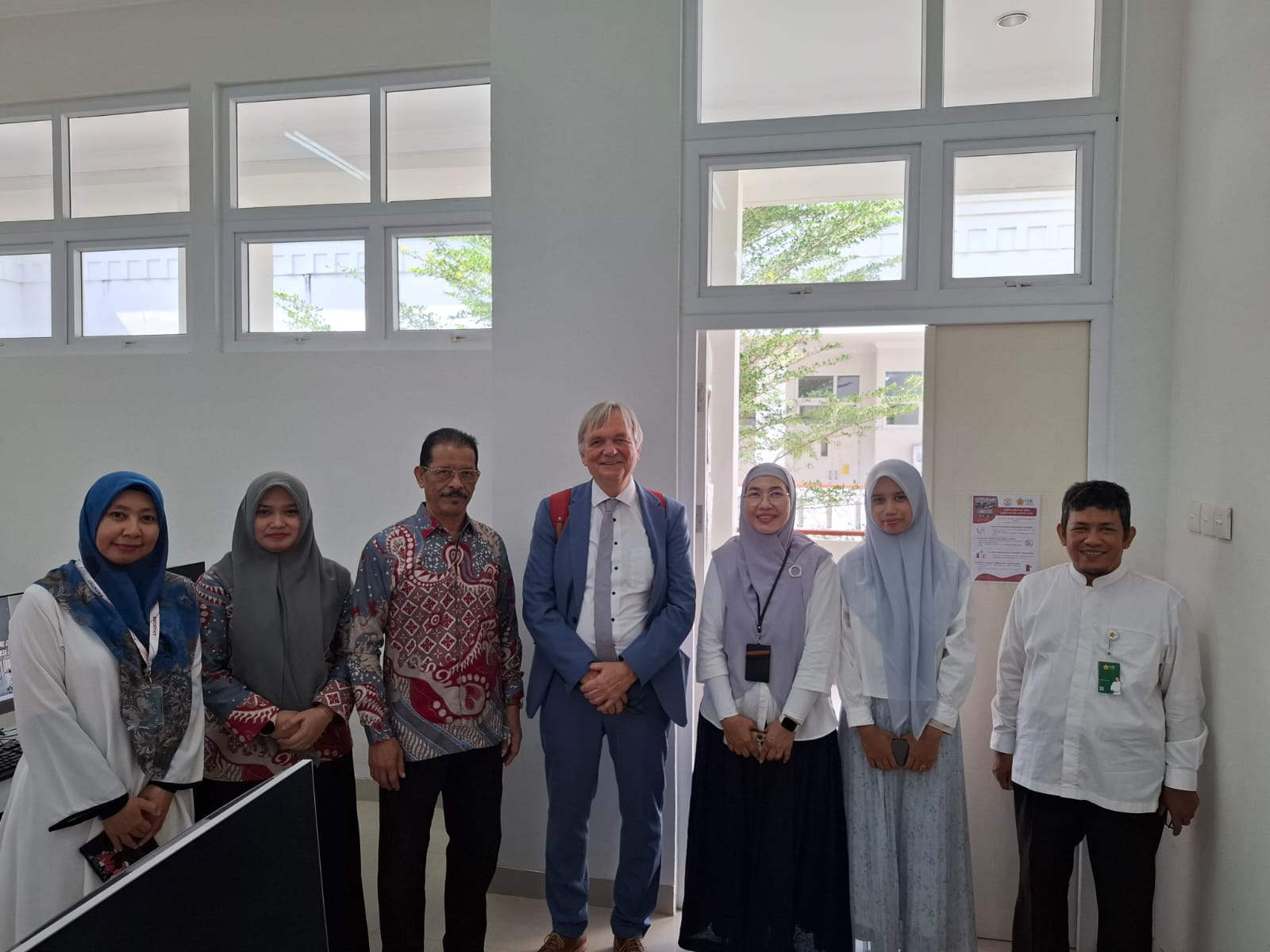
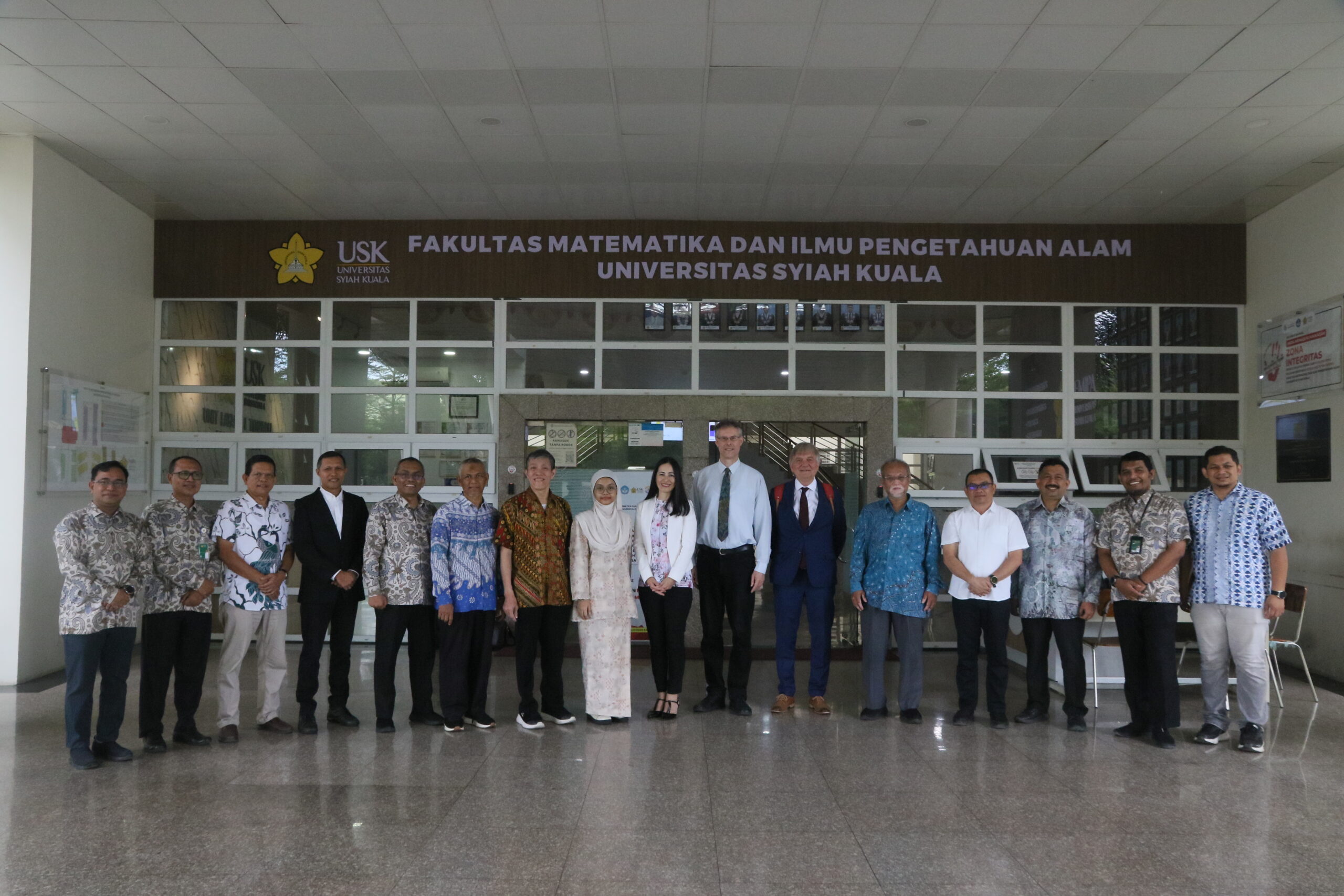
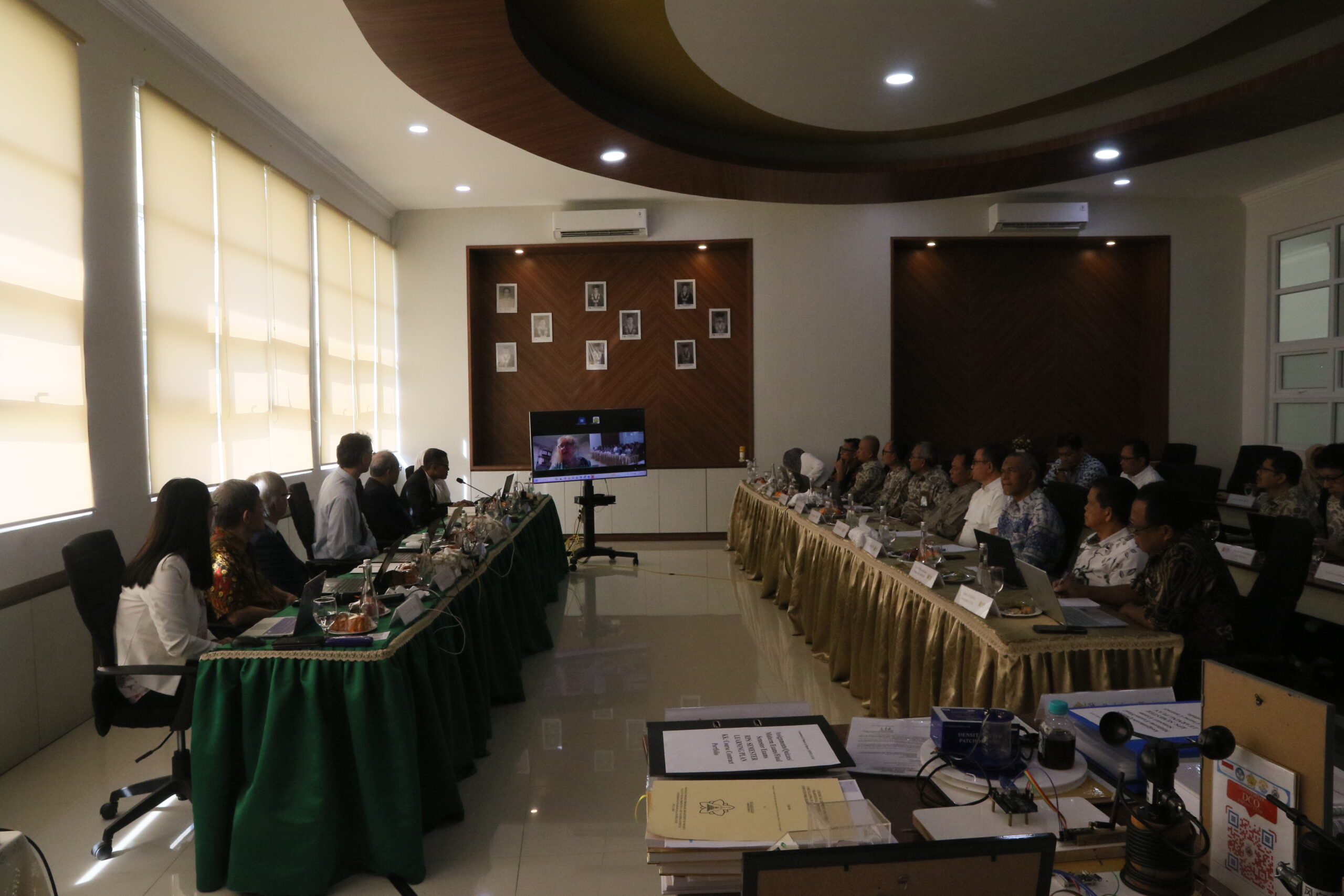
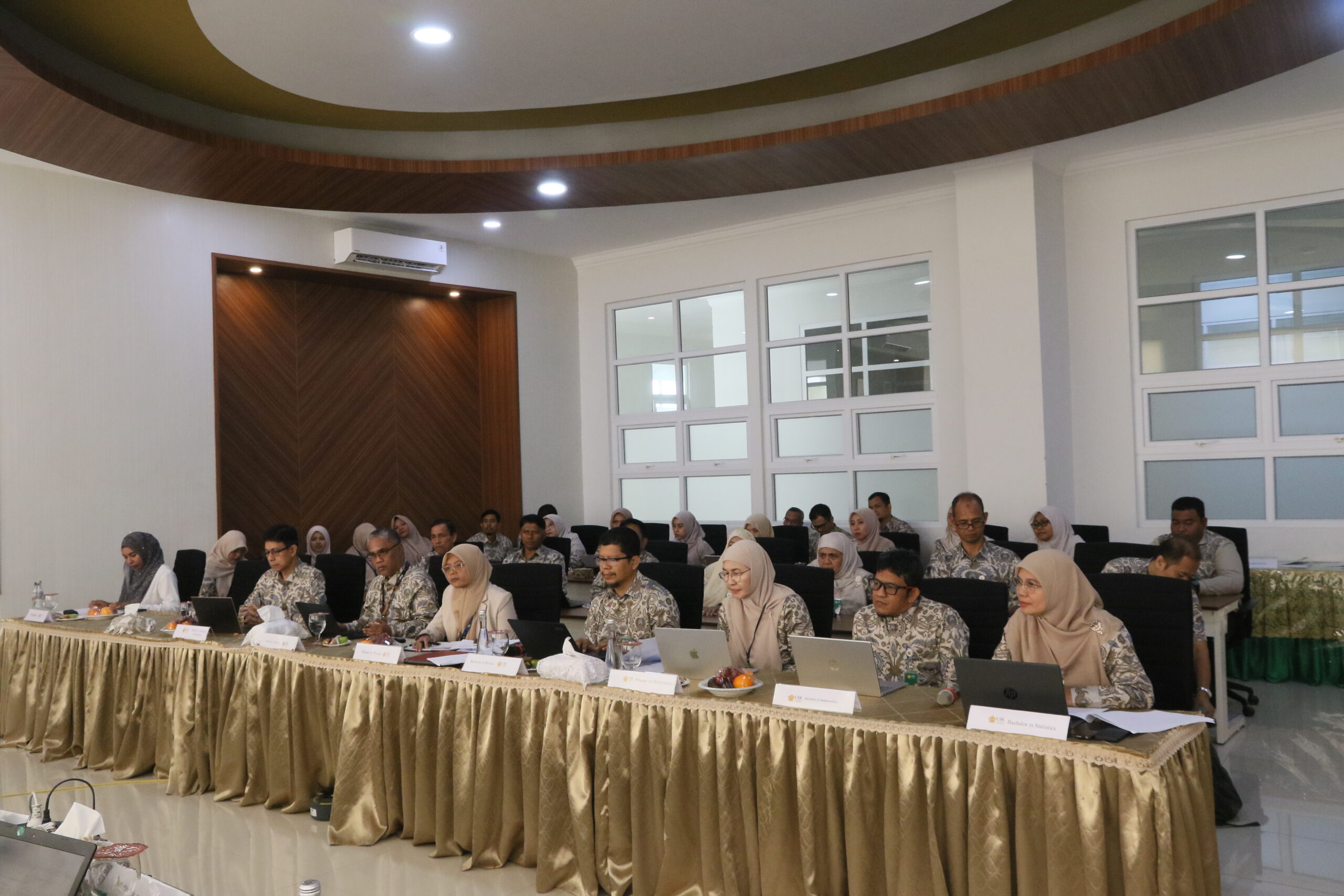
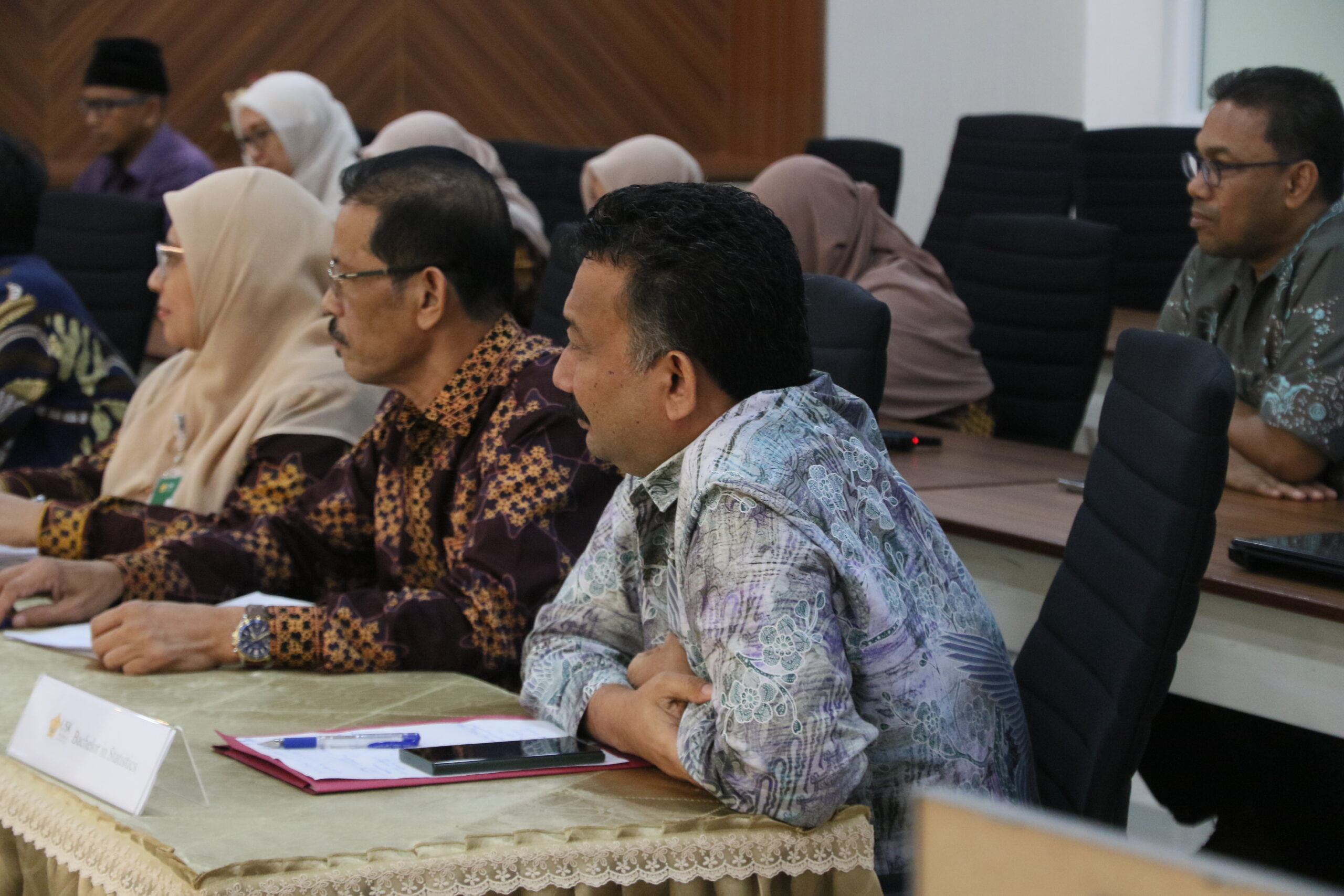
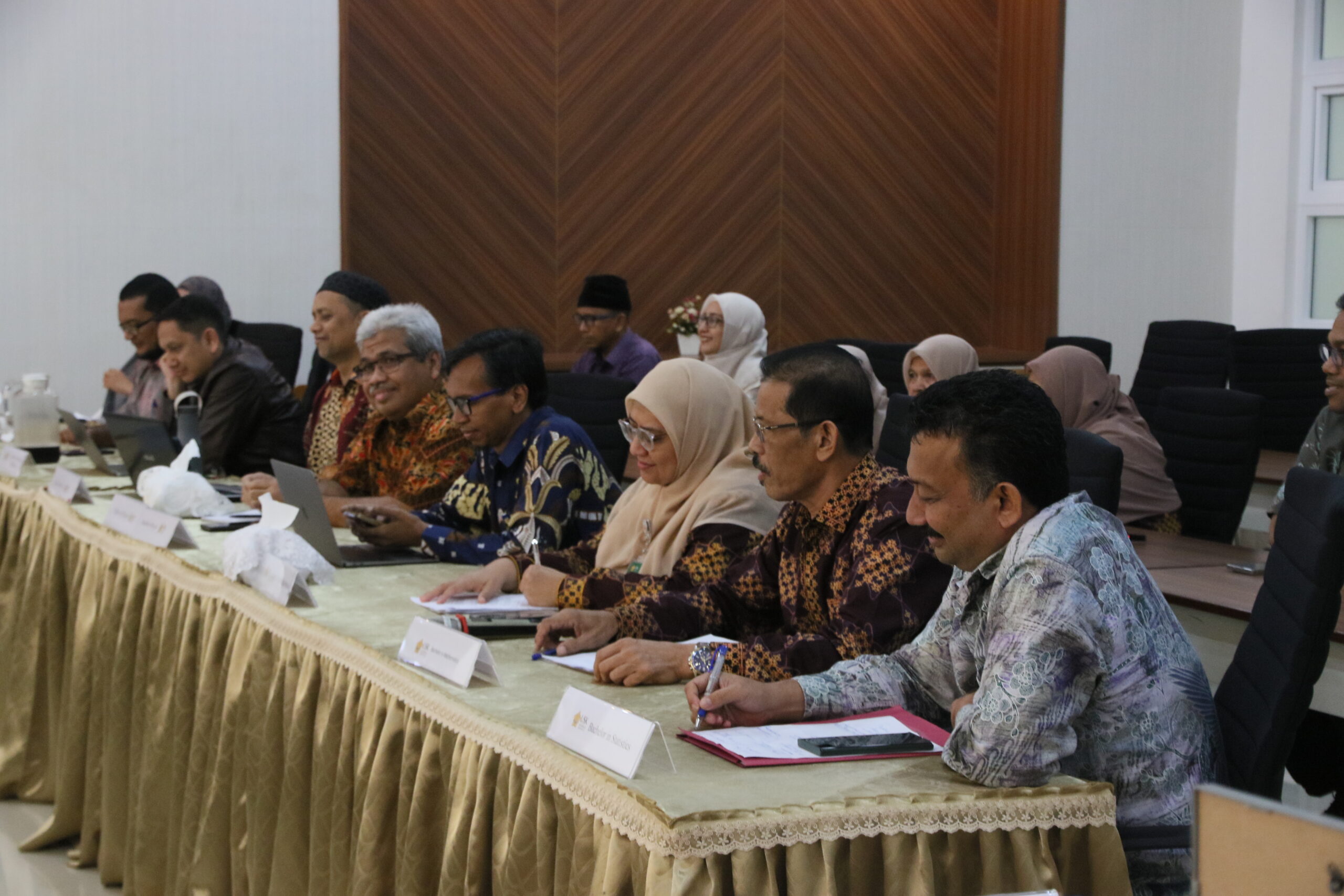
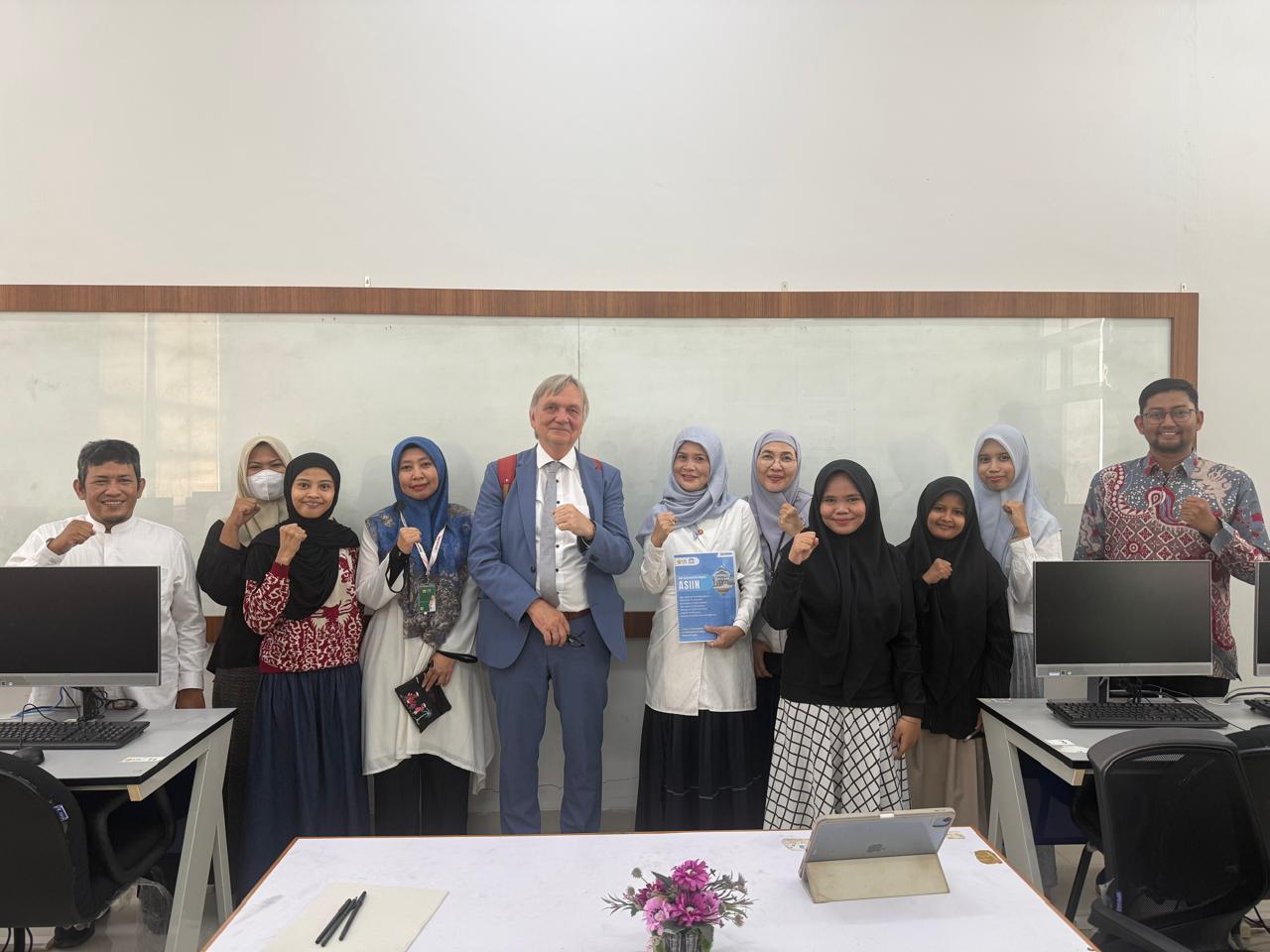
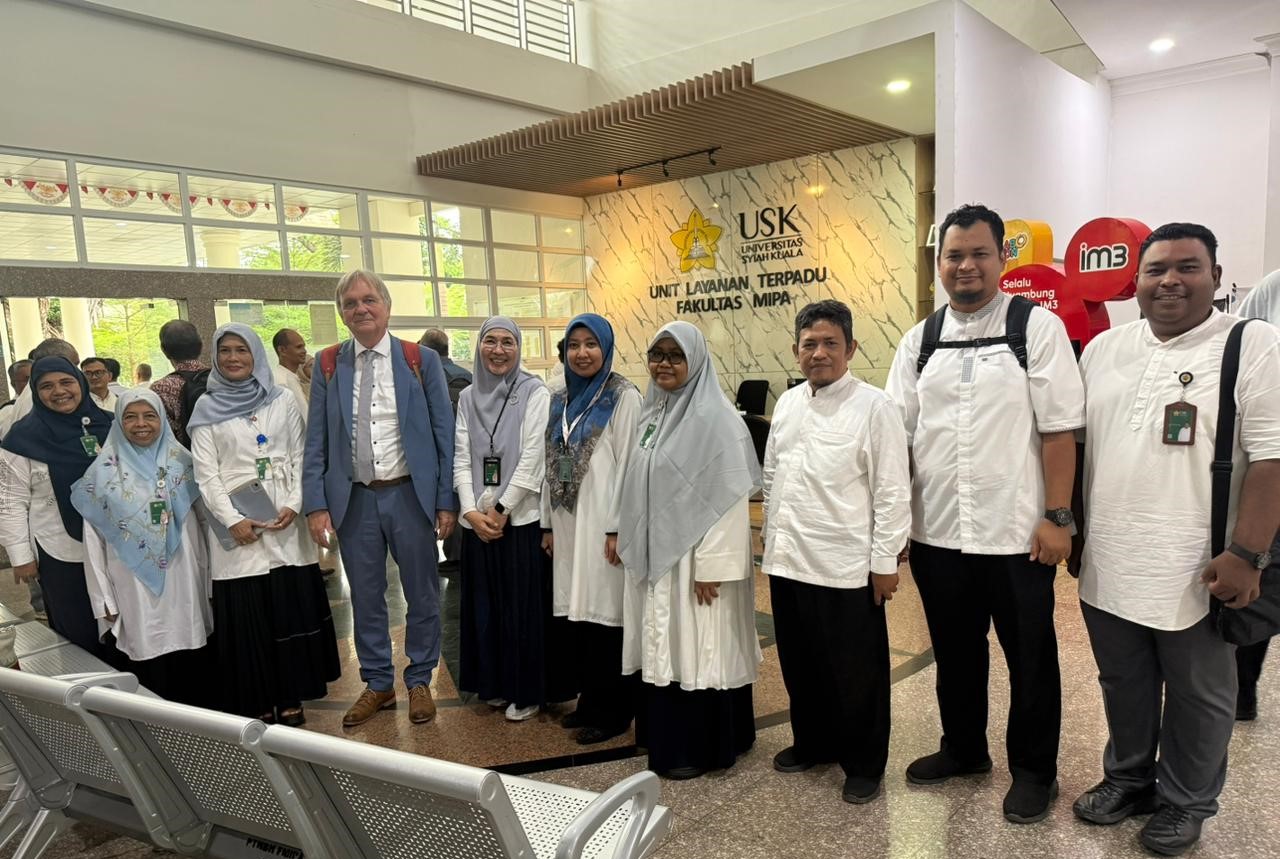
The Department of Mathematics, Faculty of Mathematics and Natural Sciences (FMIPA), Universitas Syiah Kuala (USK), successfully conducted the On-Site Visit for ASIIN International Accreditation on 7–8 May 2026 at FMIPA USK. The on-site visit was carried out as part of the international accreditation process for Cluster B, which includes the following study programs: Bachelor in Mathematics, Bachelor in Physics, Bachelor in Informatics, Bachelor in Statistics, Master in Mathematics, Master in Physics, and Master in Artificial Intelligence.
This important agenda was organized as part of the international accreditation process conducted by ASIIN in collaboration with FMIPA USK to evaluate and ensure the quality of higher education based on international standards.
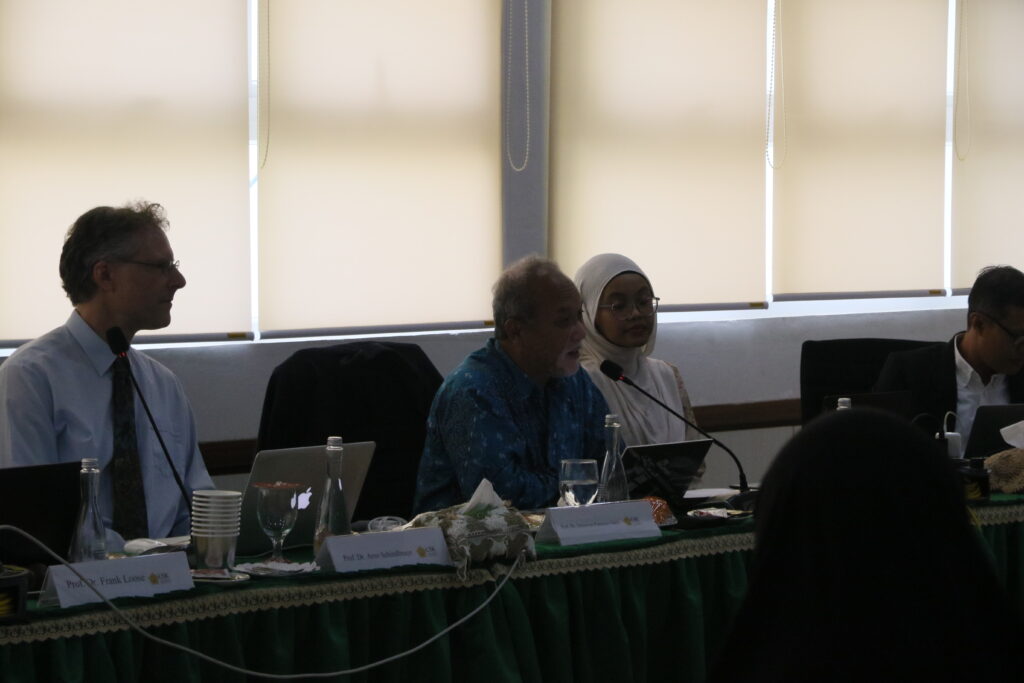
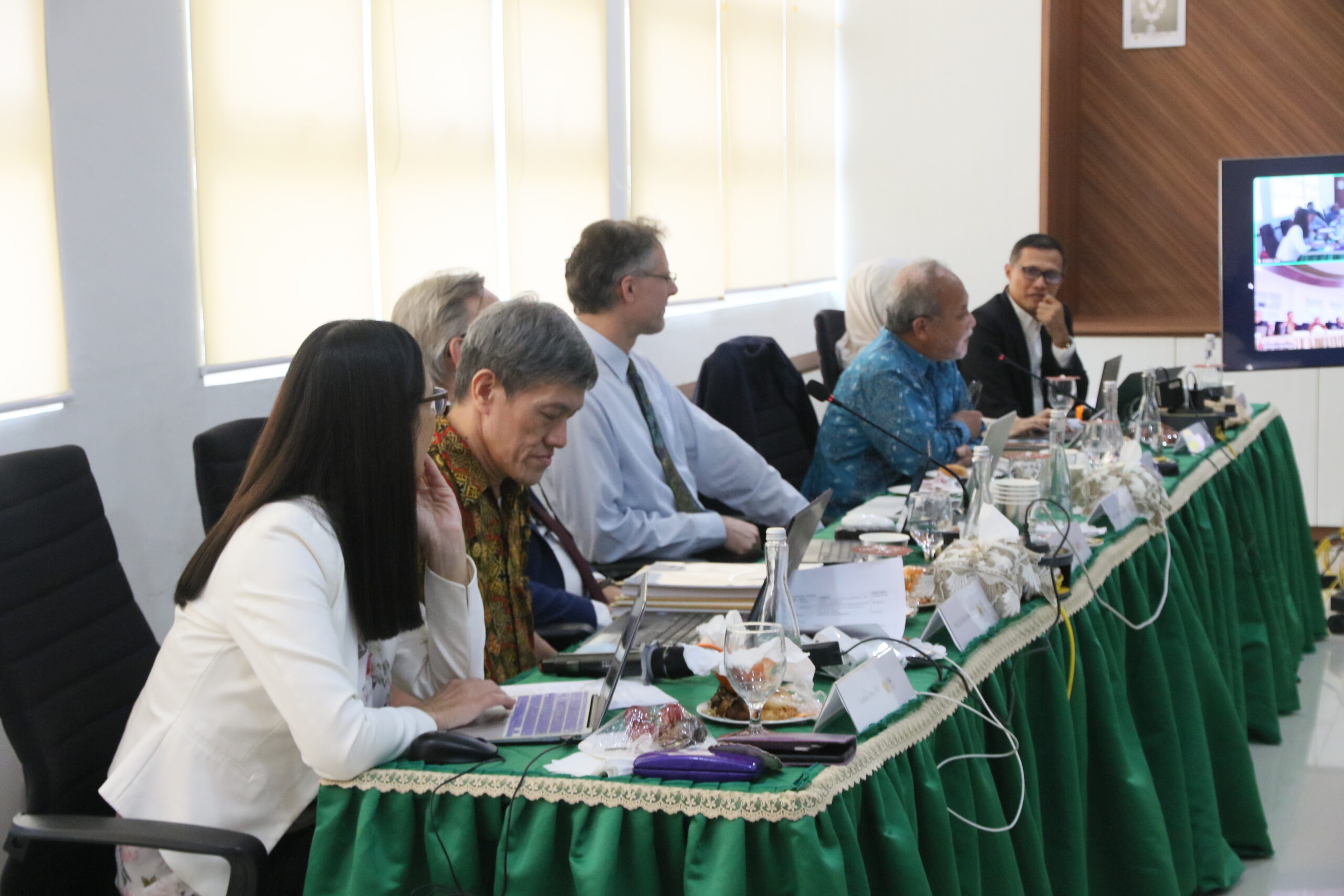
The expert group involved in the accreditation process consisted of internationally recognized academics and professional representatives, namely:
- Prof. Dr. Frank Loose — University of Tübingen
- Prof. Dr. Margitta Pries — Berlin University of Applied Sciences and Technology
- Prof. Dr. Arno Schindlmayr — Paderborn University
- Prof. Dr. Joko Lianto Buliali — Institut Teknologi Sepuluh Nopember
- Prof. Dr. Setyawan Purnomo Sakti — Brawijaya University
- Wilfridus Handaya — Industry Representative (Tuwuhwutuh)
- Salma Dewi Nataya — Student Representative from Universitas Gadjah Mada
Representing ASIIN, the accreditation process was coordinated by Emeline Jerez, PhD from the ASIIN Office.
Specifically for the Bachelor in Mathematics and Master in Mathematics programs, the assessment was conducted by two international assessors, namely Prof. Dr. Frank Loose from the University of Tübingen and Prof. Dr. Arno Schindlmayr from Paderborn University.
ASIIN (Accreditation Agency for Degree Programs in Engineering, Informatics, Natural Sciences and Mathematics) is an internationally recognized accreditation institution based in Germany that evaluates academic programs in the fields of engineering, computer science, natural sciences, and mathematics. Through this accreditation process, academic programs are assessed comprehensively in terms of curriculum quality, learning outcomes, teaching systems, facilities, quality assurance, and relevance to global academic and industrial needs.
The visit was also attended by university leaders and stakeholders, including the Rector and Vice Rectors, Dean and Vice Deans of FMIPA, heads of supporting institutions and directorates, program coordinators, teaching staff, students, alumni, industrial partners, as well as ASIIN experts and staff members.
Opening Sessions and Academic Discussions
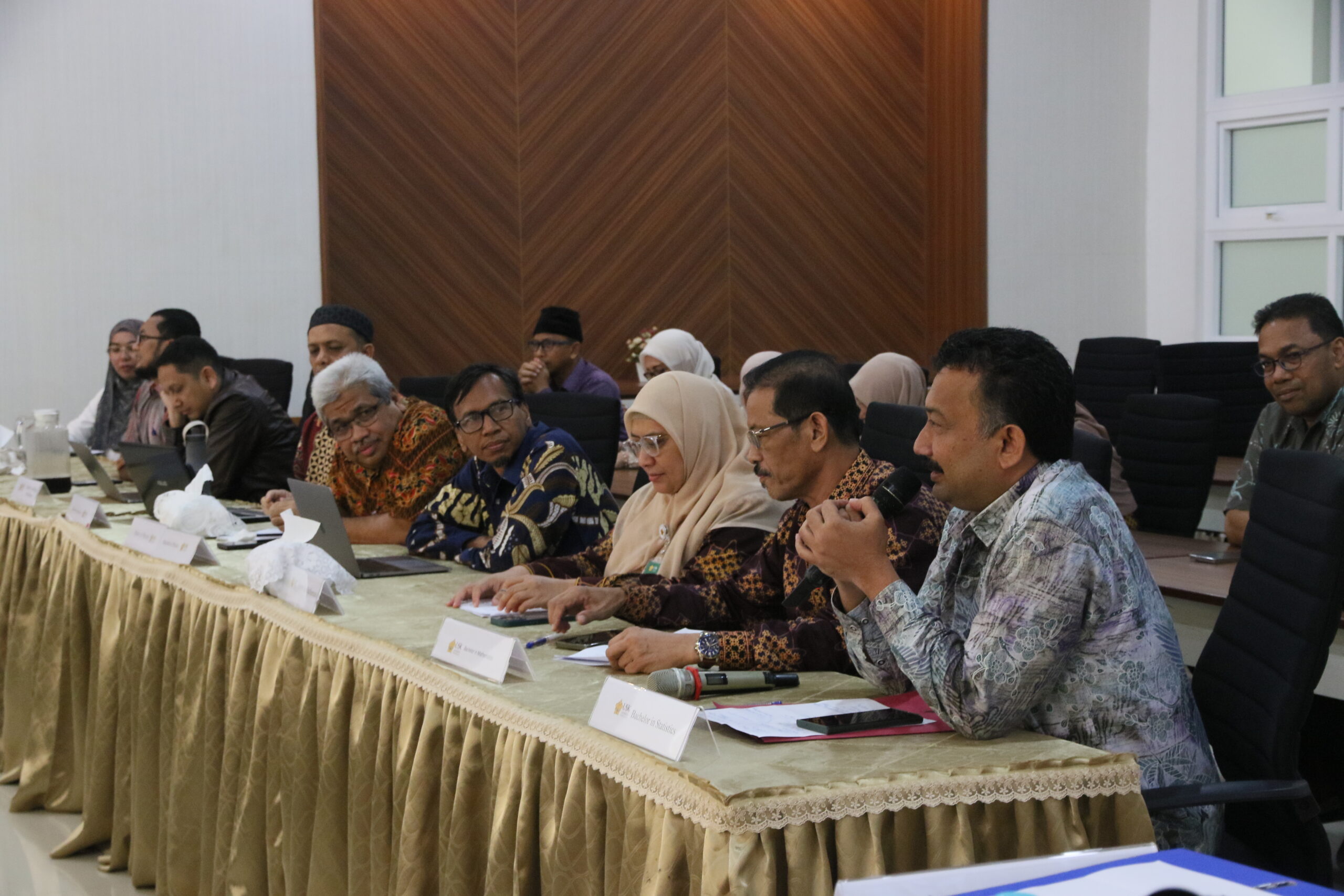
On the first day, 7 May 2026, the activities began with an Opening Meeting involving program coordinators and representatives of the Rector’s Office. The discussion covered various strategic issues, including the future development of the university, the position of the study programs within the university framework, academic management, quality assurance systems, staff development, collaborations, facilities, and learning management.
The agenda continued with a Meeting with Program Coordinators, focusing on educational objectives, curriculum structure, teaching methods, academic counseling, examination systems, study outcomes, and labor market relevance. In addition, the assessors also conducted discussions with industrial partners, private sector representatives, and alumni regarding curriculum development, internship opportunities, and collaboration in final thesis supervision.
Another important session involved a Meeting with Teaching Staff, where discussions highlighted curriculum implementation, teaching methodologies, student support systems, and professional development opportunities for lecturers and academic staff.
Laboratory and Facility Visitation
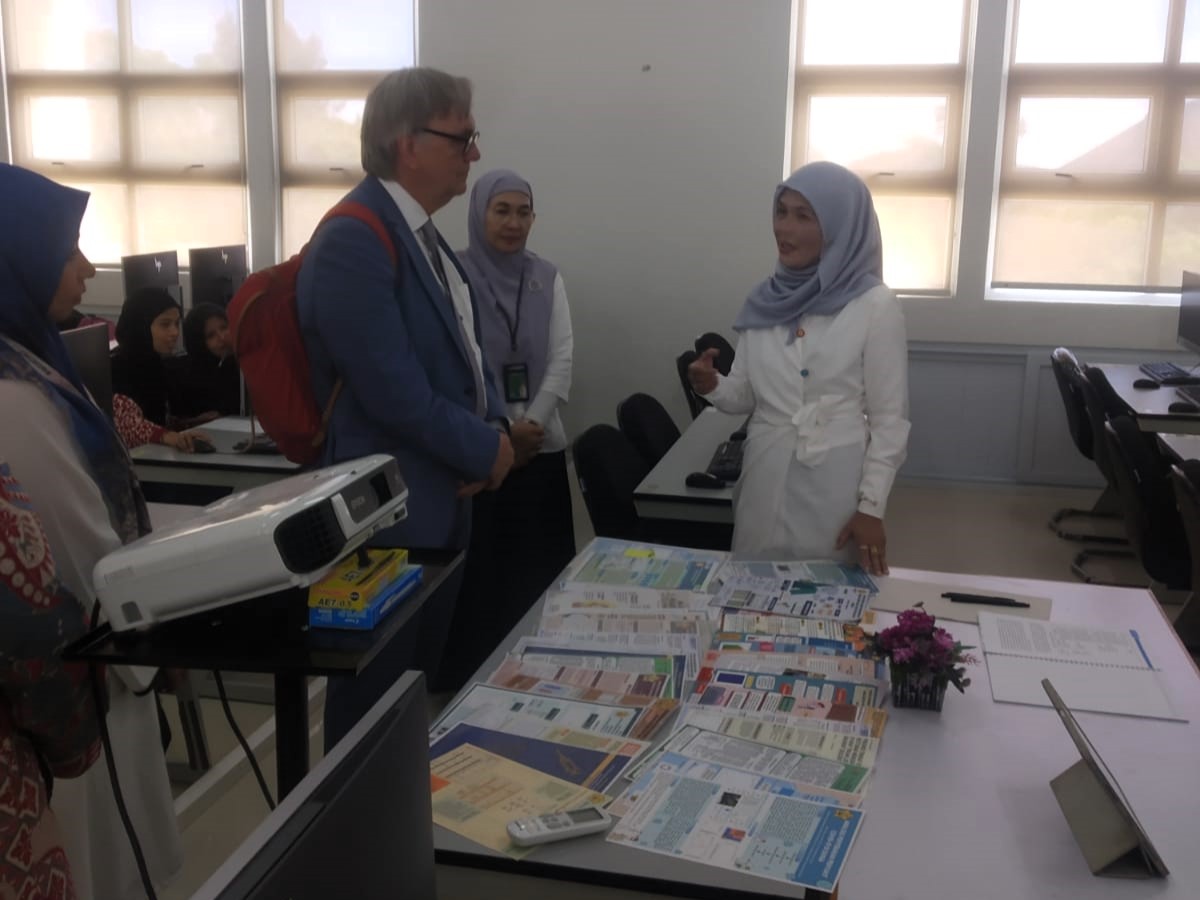
On the second day, 8 May 2026, the assessors conducted visits to several university facilities and laboratories to directly observe the learning and research environment at Universitas Syiah Kuala. The visitation included the Tsunami and Disaster Mitigation Research Center (TDMRC) USK, ICT Center, and USK Library.
At the Department of Mathematics FMIPA USK, the assessors visited several laboratories, namely:
- Dynamic Optimization Laboratory
- Numerical Methods and Numerical Computation Laboratory
- Mathematical Modeling and Simulation Laboratory
- Applied Mathematics Laboratory
These visits provided opportunities for further discussions between the assessors and representatives of the participating laboratories and institutes regarding research activities, facilities, and academic support systems.
Interaction with Students and Closing Session
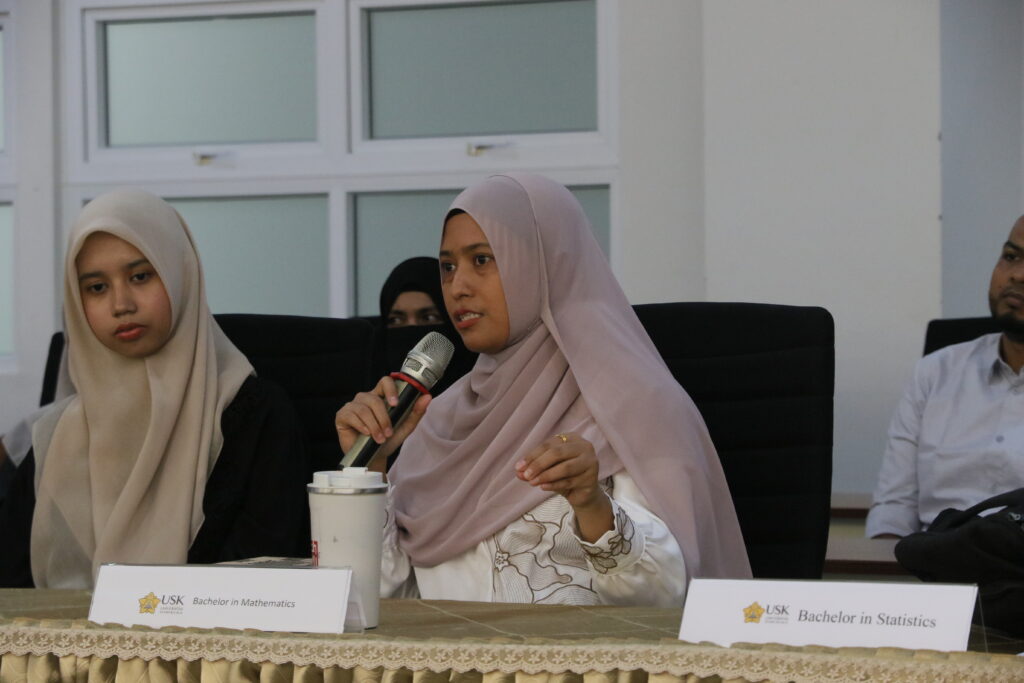
The on-site visit also included a Meeting with Students, where the assessors discussed educational goals, curriculum implementation, academic services, examination systems, student support, study conditions, and international study opportunities. This session allowed students to share their academic experiences and perspectives directly with the assessors.
At the end of the visit, the assessors held a final internal discussion before conducting the Final Meeting with program coordinators and representatives of the Rector’s Office. During this session, the peer group summarized their impressions and provided opportunities for the university to clarify any remaining issues related to the accreditation process.
Commitment to International Quality Standards
The implementation of the ASIIN On-Site Visit reflects the strong commitment of the Department of Mathematics FMIPA USK toward continuous improvement and international recognition of academic quality. Through this process, the department aims to strengthen its educational standards, enhance international collaboration, and produce graduates who are globally competitive in the fields of mathematics and applied sciences.
The Department of Mathematics FMIPA USK hopes that this international accreditation process will further encourage innovation, academic excellence, and sustainable development in education, research, and community engagement at both national and international levels.