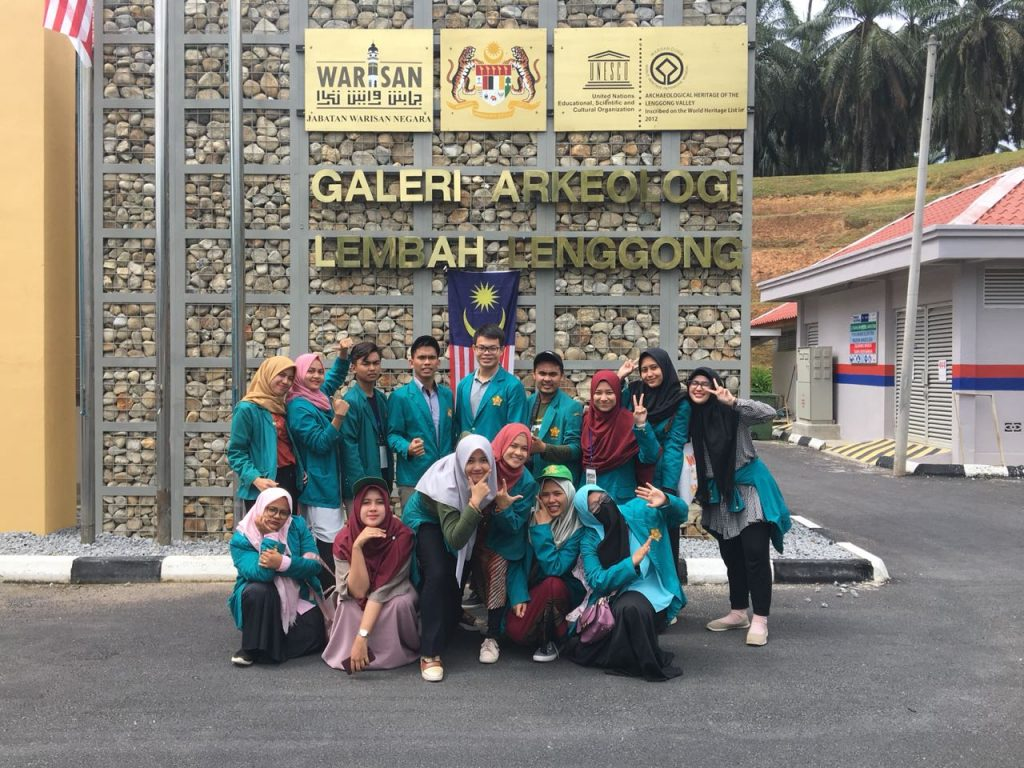
Some time ago, Universitas Syiah Kuala sent 15 of its students to participate in an International Community Service Program (KKN International) in Malaysia. One of the selected students was from the Mathematics Study Program, namely Rahmi Muliana. Based on this opportunity, Rahmi took the initiative to share her experiences during the program. The following is Rahmi’s story during her time there.
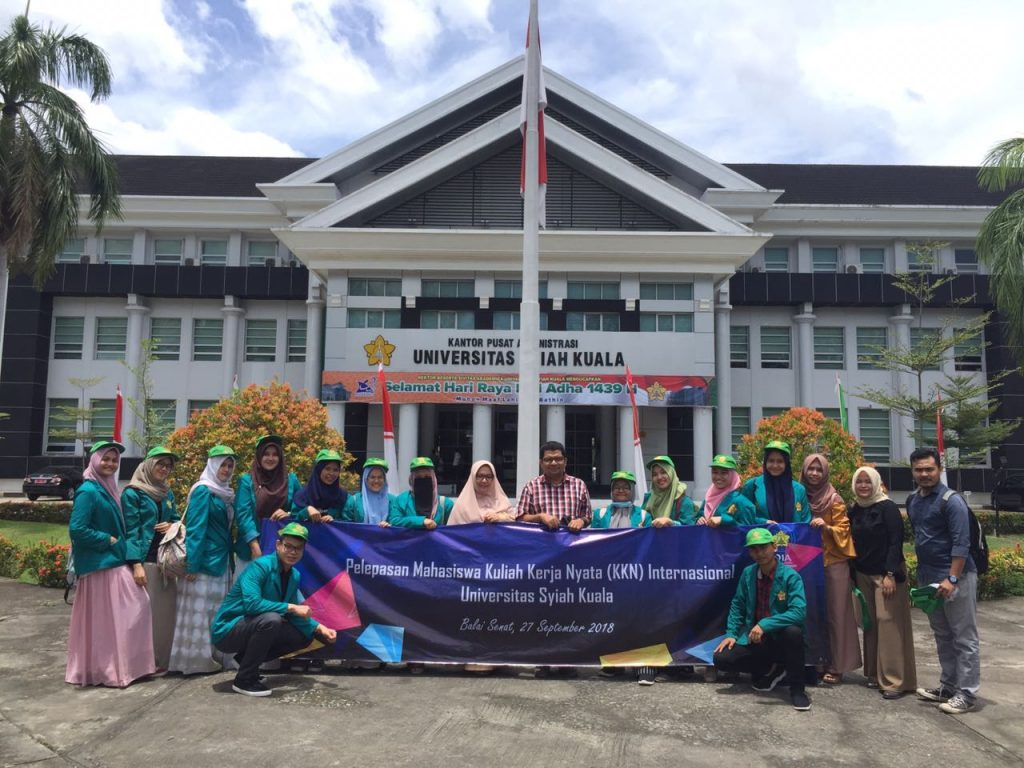
“Allow me to introduce myself. My name is Rahmi Muliana, a Mathematics student at the Faculty of Mathematics and Natural Sciences, Universitas Syiah Kuala, class of 2015. I would like to share a bit of my experience while I was in Malaysia from August to September. Before that, please allow me to express my gratitude and praise to Allah SWT and send blessings upon the Prophet Muhammad SAW. Without Them, perhaps this writing would never have been completed. My fingers would not have moved without the will of Allah. Alhamdulillah. Allahumma shalli ‘ala Muhammad.
August to September 2018 became a historic period in my life. Through the 2018 International KKN Program of Universitas Syiah Kuala, I was officially selected as a representative of the Mathematics Study Program, Faculty of Mathematics and Natural Sciences, Universitas Syiah Kuala, to participate in this activity—something I had never imagined before.
The first reason I applied for the International KKN program was that I did not receive permission from my parents to participate in the 2018 Regular KKN in Gayo Lues. It was heartbreaking because I had already fulfilled all the requirements, yet I was unable to join due to parental permission issues. However, that sadness faded when I found information about the International KKN through social media. As an alternative, I asked my parents for permission to join this program. Alhamdulillah, Allah granted me permission through my parents, even though at first I doubted that they would allow me to go.
International KKN has almost the same role as other KKN programs at Universitas Syiah Kuala, requiring students to serve in a community in order to learn directly from society and to implement the knowledge they have gained in their study programs. Similar to Regular KKN, International KKN students are required to carry out main programs, supporting programs, additional programs, auxiliary programs, and special programs. The difference lies in the location of implementation, which also affects the overall system of the program.
The 2018 International KKN of Universitas Syiah Kuala took place in Perak, Malaysia. Overall, this activity was attended by 14 students from various faculties, 2 companions from the Office of International Affairs (OIA), and 3 field supervising lecturers. The program lasted for 21 days, from August 28 to September 17, 2018. Unlike other KKN programs where students stay in one location from the beginning until the end, International KKN students were placed in five different locations over the course of 21 days. These locations were: 5 days in Kampung Anak Kurau, 5 days in Taman Kota Wira, 4 days in Taman Chandan Putri, 4 days in Ipoh, and 3 days at Universiti Kebangsaan Malaysia. It was indeed exhausting to pack and move every five days with a very full suitcase, but it provided invaluable experiences and memories.
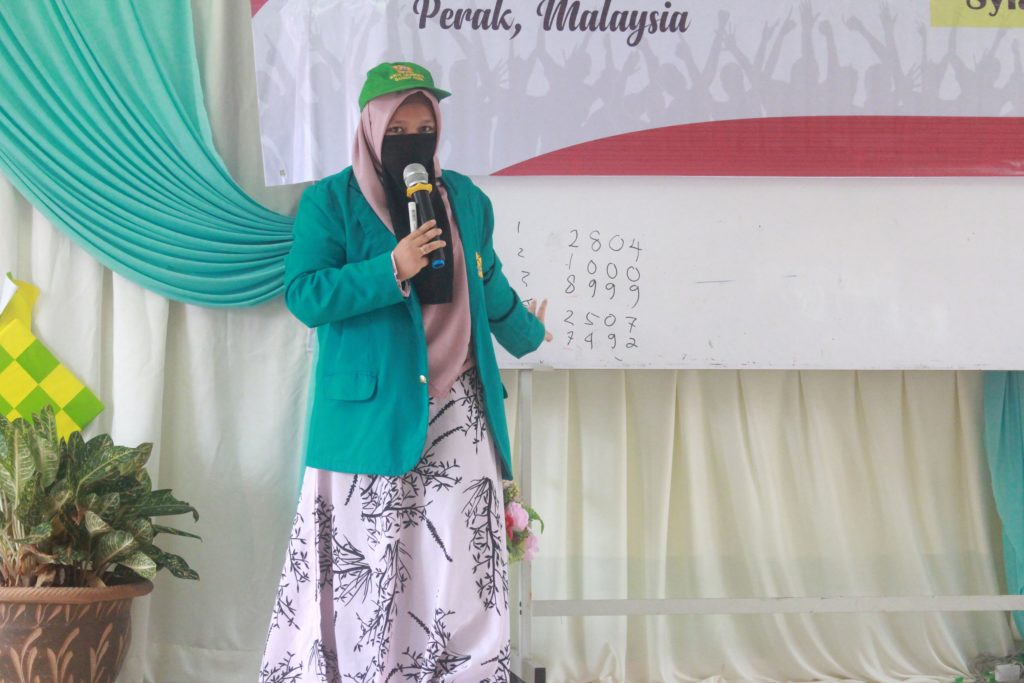
As the only representative from the Mathematics Study Program, Faculty of Mathematics and Natural Sciences, Universitas Syiah Kuala, it was my duty and responsibility to act as an ambassador for my department. It is only natural for mathematics students to introduce mathematics to anyone. In this context, I felt it was very appropriate to carry out my main program entitled “Math Fun and Easy”, which aimed to introduce the beauty and simplicity of mathematics to Malaysian students.
The “Math Fun and Easy” program was designed to help Malaysian students understand that mathematics is an important subject that can be easy and enjoyable when presented in a fun and engaging way, such as through mental arithmetic techniques and mathematical games. The implementation of mathematics through mental calculation and math games attracted significant attention from students, both at the elementary and high school levels. This was evident from their enthusiasm and positive responses during the program. Many of them felt the benefits of the activity. It was truly satisfying to be able to slightly change their mindset—from being afraid of mathematics to becoming enthusiastic and eager to learn more. Alhamdulillah, this program was successfully implemented in two schools in Malaysia: SK Sri Kurau (equivalent to elementary school) on August 29, 2018, and SMK Sayong (equivalent to senior high school) on September 7, 2018.
On another occasion, I also taught students how to do mathematical calculations using the Acehnese language. This supporting program aimed to introduce the Acehnese language to Malaysian students. Interestingly, the uniqueness of the Acehnese language increased the students’ enthusiasm for learning. They were very excited to perform mathematical calculations using Acehnese. Alhamdulillah, this program was completed on August 30, 2018, at SK Sri Kurau, Anak Kurau, Perak, Malaysia.
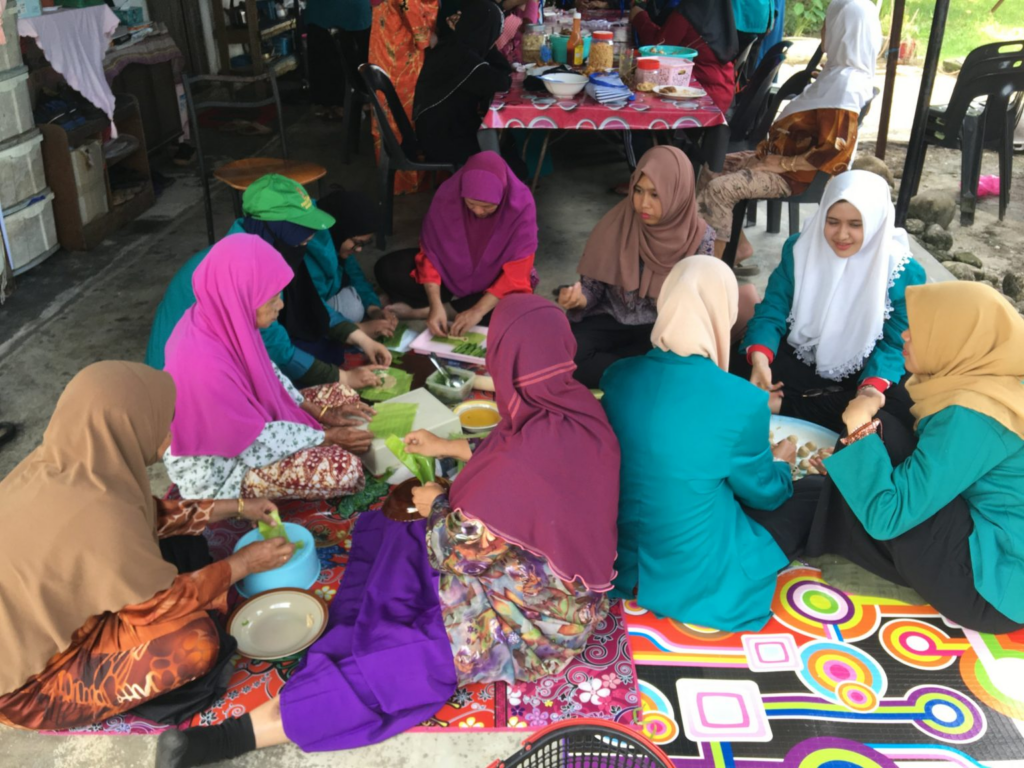
Another supporting program I carried out was “Practical Training on Making Timphan, a Traditional Acehnese Cake.” On August 31, 2018, together with the residents of Kampung Anak Kurau—especially the women—I conducted a hands-on session on making Timphan Aceh at the village head’s house. This program was very useful in introducing Acehnese culinary culture to the Malaysian community. It was also expected that, through this activity, the people of Kampung Anak Kurau would be able to introduce Timphan more widely in Malaysia, since they had learned the process of making it. In this way, Acehnese Timphan culture could become known throughout Malaysia.
These were some of the programs I carried out in Perak, Malaysia. There were many other activities that I cannot mention in full here, such as organizing the event “Malam Aceh Menangis” to introduce life in Aceh before and after the tsunami; discussions comparing Islamic Sharia law in Aceh and Malaysia with a Mufti of Perak; visits to historical sites in Malaysia; discussions with students of Kolej Pendeta Za’ba, Universiti Kebangsaan Malaysia; discussions on economic growth in Perak at the Perak State Government Office; learning to cook Malaysian cuisine; and many more.
What I want to emphasize from my entire experience there is the kindness of the people in welcoming and treating guests. It seems they truly uphold the principle of “honoring guests.” We came as guests, but were treated as more than guests. We came to carry out our programs, and they accepted us wholeheartedly, even helping us greatly to ensure the success of each program. We stayed in foster families’ homes as a place to rest from our activities, but they treated us as more than their own children.
Before leaving, I had thought, “It must be very troublesome and exhausting to move five times over 21 days.” And indeed, that was true—it was very tiring. However, behind all of that, there was something unforgettable. Every time we moved to a new place, I could not hold back my tears. We were all overwhelmed with emotion each time we had to leave. The kindness of the foster families in every place we stayed was extraordinary, and it was very difficult to part from them. Leaving them felt like a child who is deeply loved by their parents but still has to go away. Isn’t that heartbreaking?
That is a glimpse of my experience in Malaysia while participating in the International KKN program. I hope this writing is beneficial to anyone who reads it. Thank you for reading.”